
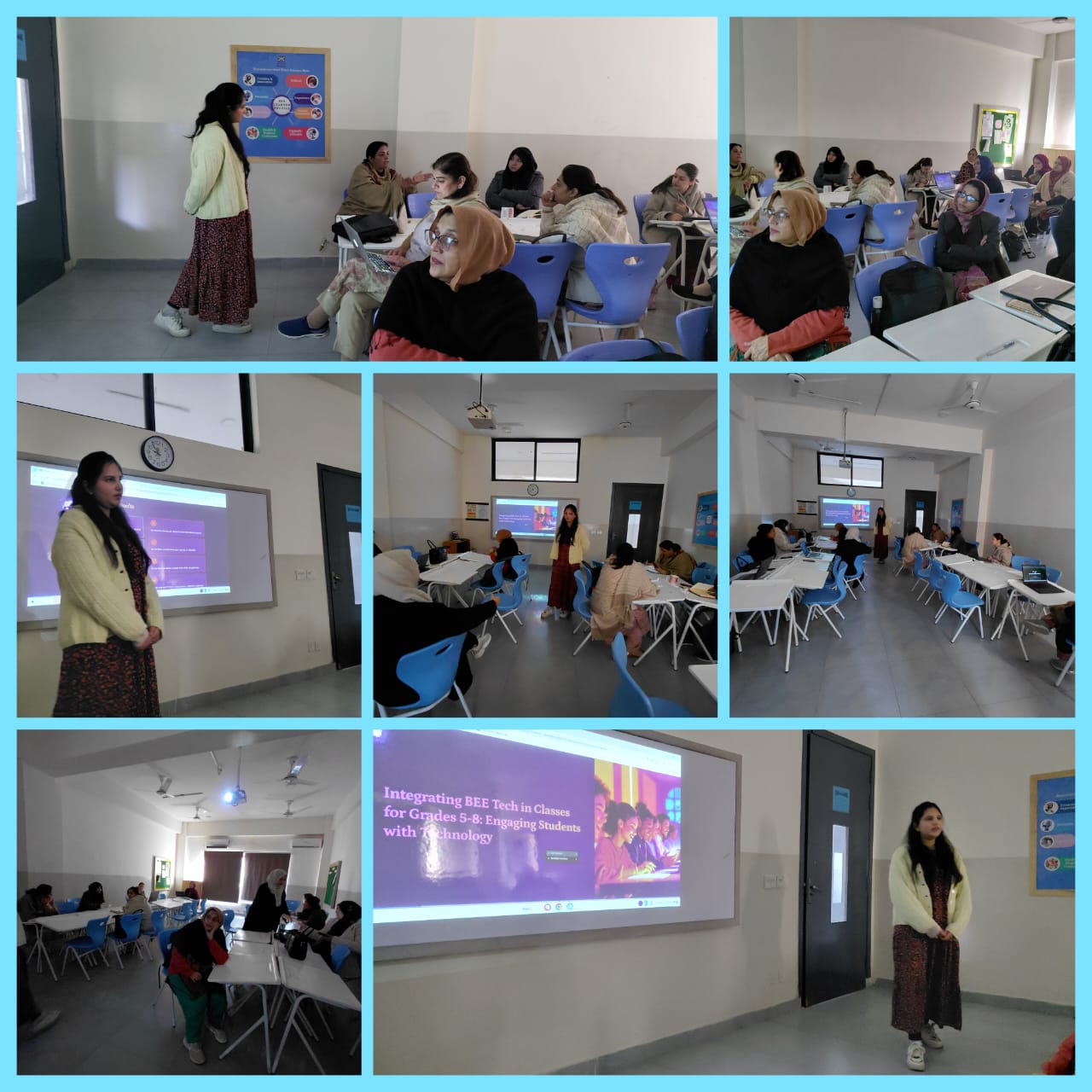
Bridging Classrooms and Clicks: A Transformative BEE Tech Meeting at Civil Lines Campus
Today, the Civil Lines Campus buzzed with purposeful dialogue, reflective questions, and forward-thinking strategies as we hosted an Integrating BEE Tech Meeting led by our BEE Champion, Ms. Aleeza Iqbal. More than a workshop, the session was a powerful conversation about where teaching stands today and where it must head tomorrow.
Listening First: Teachers at the Heart of Integration
Ms. Aleeza began the session by doing something impactful yet often overlooked—listening. Teachers were invited to openly share how they feel about integrating BYOAD (Bring Your Own Approved Device) activities into their classrooms. This honest exchange set the tone for a safe, collaborative space where concerns, excitement, and practical realities were equally valued.
Why Technology Integration Matters
The discussion naturally progressed to why technology integration is no longer optional but essential. As Ms. Aleeza highlighted, today’s learners are inherently tech-friendly—they think, explore, and communicate digitally. By thoughtfully integrating technology, teachers can:
- Address differentiation by meeting learners at their individual levels
- Promote inclusion through accessible and adaptive tools
- Enhance engagement while deepening understanding
- Foster independent and responsible learning
Technology, when used with intention, becomes a bridge—not a barrier—to meaningful learning.
From Theory to Practice: The SAMR Model
One of the highlights of the session was the clear and relatable explanation of the SAMR Model, which helped teachers reflect on how they are currently using technology and how they can move towards more transformative practices. The model encouraged teachers to shift from simple substitution to meaningful redefinition of learning tasks—step by step, at a comfortable pace.
Responsible Use: BYOAD Dos, Don’ts, and SOPs
Practicality remained at the forefront as Ms. Aleeza walked teachers through the dos and don’ts of BYOAD, ensuring clarity around responsible, safe, and purposeful usage. The frequency of Chromebook use was discussed and aligned with instructional goals rather than convenience.
Clear Standard Operating Procedures (SOPs) for Chromebook cupboards were shared, emphasizing accountability. Class teachers were entrusted with the responsibility of their respective cupboards, reinforcing ownership and collective responsibility.
Empowering Teachers: The BSS Toolkit
A key takeaway was the sharing of the BSS Toolkit, a comprehensive resource hub packed with vetted digital tools ready for classroom use. Teachers also shared tools they have already used successfully, turning the session into a rich exchange of real classroom experiences rather than a one-way presentation.
A Step Forward, Together
The session concluded not with instructions, but with confidence—confidence that technology integration is achievable, manageable, and impactful when approached thoughtfully. Under the guidance of Ms. Aleeza Iqbal, the workshop successfully aligned vision with practice, reminding us that technology is not about replacing teachers, but about amplifying their impact.
At Civil Lines Campus, today marked another meaningful step towards future-ready classrooms—where pedagogy leads, and technology empowers.