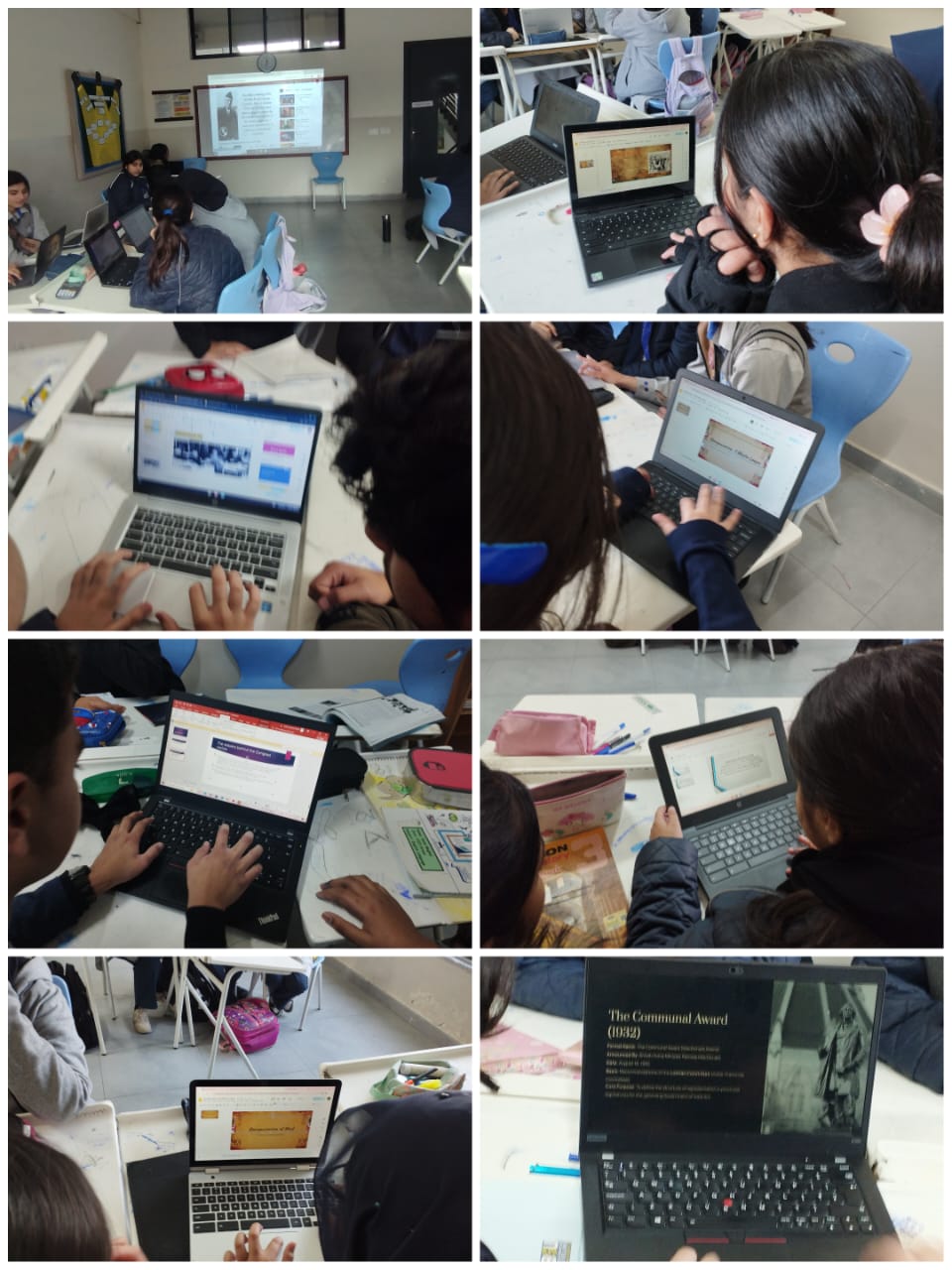
History is not merely a sequence of dates and documents; it is a story of decisions, struggles, and turning points that shape nations 🌍. In a dynamic classroom experience, Grade 8 Red and Green students stepped beyond textbooks to critically examine the political maneuvers that accelerated the Pakistan Movement between 1932 and 1939—a defining period in the subcontinent’s history.
Working collaboratively 🤝, students analyzed landmark developments such as the Communal Award (1932), the Government of India Act (1935), the 1937 Elections, and the reorganisation of the All-India Muslim League. Each event was explored not as an isolated occurrence, but as a crucial piece of a larger political puzzle that intensified Muslim political consciousness and reshaped the demand for representation and rights.
Armed with their Chromebooks 💻, students worked in focused research groups, each responsible for investigating one political milestone. This approach transformed learning into an inquiry-driven process 🔍. Students evaluated sources, identified causes and consequences, and debated the impact of each development on the future of Muslims in the subcontinent.
The culmination of their research was a series of clear, creative, and well-structured PowerPoint presentations 🎤📊. These presentations reflected not only historical understanding but also strong analytical thinking, teamwork, and digital literacy. Complex political ideas were confidently explained, timelines were thoughtfully connected, and key insights were presented with clarity and conviction.
This learning experience demonstrated how history becomes truly meaningful when students are empowered to explore, question, and present knowledge themselves 🌱. By blending research, technology, and collaboration, Grade 8 Red and Green students didn’t just study history—they experienced it 📜, gaining a deeper appreciation of the political foundations that led to the creation of Pakistan 🇵🇰.
From Pages to PowerPoints: When History Came Alive in Grade 8 📖➡️💻
259 Views