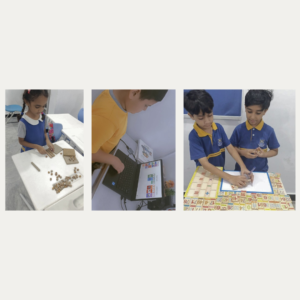
What if every corner of the classroom became an opportunity to explore, create, collaborate and discover?
As a teacher, I believe meaningful learning happens when children take an active role in their learning. Every child is unique, with different interests, abilities and ways of understanding the world. This makes it important to create classroom experiences that go beyond textbooks and worksheets. One approach that makes learning particularly engaging and purposeful is station-based learning.
Station learning is much more than moving students from one activity to another. It creates opportunities for children to explore concepts, solve problems, share ideas and learn through hands-on experiences. Each station offers a different way to engage with a concept, making learning interactive, enjoyable and meaningful.
Where Learning Meets Creativity
Imagine children exploring a Science concept through experiments, developing language skills through picture prompts, solving mathematical challenges and expressing their understanding through creative tasks.
This is the beauty of station-based learning! Children are not simply receiving information; they are actively constructing their understanding through exploration and discovery. Puzzles, sorting activities, riddles, manipulatives and interactive challenges encourage curiosity, independent thinking and problem-solving.
Every Child Learns, Every Child Participates
One of the greatest strengths of station learning is its ability to cater to different learning needs. Through carefully planned and differentiated activities, every child gets an opportunity to participate at their own level. Some learners may benefit from picture clues and guided support, while others can explore challenging tasks that encourage deeper thinking.
This creates an inclusive environment where every learner feels valued, supported and appropriately challenged.
Growing Beyond Academic Learning
The benefits extend far beyond academic achievement. Working with peers develops communication, cooperation and teamwork. Completing tasks independently builds confidence and responsibility, while solving challenges encourages resilience and critical thinking.
Station learning also allows teachers to become facilitators of discovery. By observing students, asking purposeful questions and providing timely support, teachers gain valuable insights into their understanding, strengths and learning needs.
Small Stations, Big Possibilities!
For me, the true beauty of station learning lies in the little moments: a child confidently solving a challenge, a group sharing ideas or a hesitant learner participating with growing confidence.
These moments remind us that learning becomes most meaningful when children are given the freedom to explore, the confidence to participate and the opportunity to create.
Because when children learn by doing, thinking and discovering, every station becomes a stepping stone towards independence, creativity and lifelong learning!