
A change of scenery, a notebook in hand and plenty of questions to explore! Our Grade 7 students headed to Safari Park for a learning experience that brought their study of Ecology to life. Through observation, investigation and hands-on activities, they discovered that some of the most interesting science lessons happen outside the classroom.
As part of their Project-Based Learning (PBL) journey, students stepped into the role of young field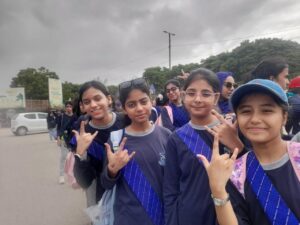 scientists, exploring different habitats and observing how plants, animals and their surroundings interact to form ecosystems. They investigated biodiversity and explored how living organisms depend on one another to maintain ecological balance.
The experience went beyond simply observing wildlife. Students explored scientific sampling techniques, including 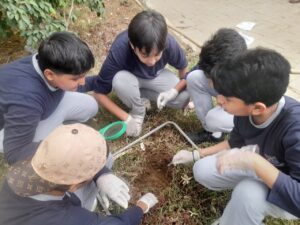 the use of quadrats and pitfall traps, to understand how scientists study and record organisms in their natural habitats. These practical investigations encouraged them to ask questions, make observations and draw conclusions based on evidence.
Why do certain organisms thrive in particular habitats? How does a change in the environment affect wildlife? What happens when one part of an ecosystem is disturbed? Such questions encouraged students to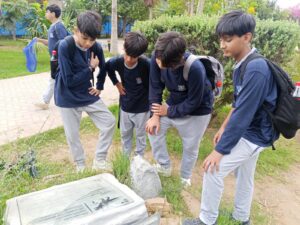 think critically and connect scientific concepts with real-world environmental challenges.
Working together, students shared observations, discussed their findings and developed their scientific inquiry, collaboration and problem-solving skills. They also reflected on the importance of biodiversity, conservation and protecting natural habitats.
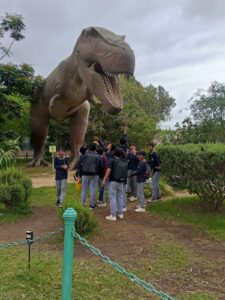 The excitement continued with a visit to Dino Valley, where life-sized dinosaur models offered a fascinating glimpse into prehistoric life. Students connected their discoveries with discussions about extinction, adaptation and how scientists use fossils to understand creatures that lived millions of years ago.
Of course, no adventure would be complete without moments of fun!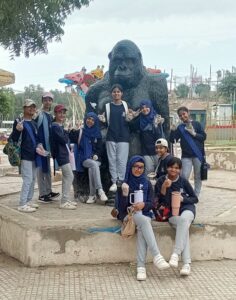 Recreational activities and shared experiences added to the excitement, making the visit both educational and memorable.
More than just an educational outing, the Safari Park experience allowed students to see themselves as curious investigators rather than passive learners. It reminded them that science is not simply about memorising facts; it is about asking questions, exploring possibilities and understanding the world around us.