
As educators, one of our greatest responsibilities is to ensure that every child feels safe, respected, heard and supported. A safe learning environment is not created through rules alone; it grows when students understand their rights, recognise their boundaries and feel confident enough to speak up when something does not feel right.
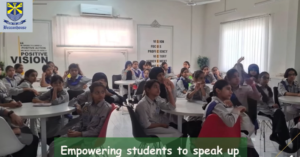 As the Student Protection and Safeguarding (SPS) Lead, I believe that safeguarding begins with awareness. It is about equipping students with the knowledge and confidence to make safe choices, recognise potential risks and seek support whenever they need it.
Our recent Student Safeguarding and Protection session with Grade VI provided an important opportunity to introduce and reinforce these essential life skills. Through interactive discussions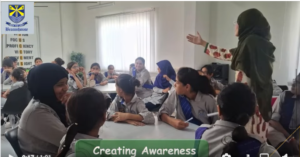 and engaging activities, students explored what it means to feel safe, how to recognise potentially unsafe situations and why personal boundaries deserve respect.
One of the key messages we explored was the importance of recognising and communicating personal boundaries. Students were encouraged to understand that their feelings matter, that they have the right to say no when something makes them uncomfortable and that they should never feel afraid or ashamed of asking for help.
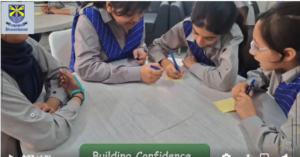 We also discussed the importance of identifying trusted adults. Knowing whom to approach when faced with an uncomfortable or unsafe situation can make a significant difference. Students were reminded that speaking up is not a sign of weakness; it is an act of courage and an important step towards protecting themselves and others.
Another important aspect of the discussion was shared responsibility. Safeguarding is not only about individual safety; it is also about creating a culture where students look out for one another, respect differences, avoid harmful behaviour and understand the importance of reporting concerns rather than remaining silent.
As an SPS Lead, such sessions remind me that safeguarding is not a one-time conversation or an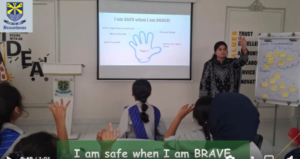 activity conducted to fulfil a requirement. It is an ongoing commitment that must be reflected in our everyday interactions, school practices and relationships with students. Children need to know that their voices matter, their concerns will be taken seriously and there are adults ready to listen and support them.
Ultimately, the purpose of safeguarding education is not to make children fearful of the world around them, but to empower them with awareness, confidence and the knowledge to seek help when necessary.
Every child deserves to feel safe, every voice deserves to be heard, and every concern deserves to be taken seriously. Creating a safer school begins when we make protection everyone’s responsibility.