
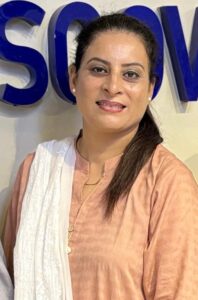
Written by Ms. Saima Kamran
In an increasingly interconnected world, the power of collaboration has become more evident
than ever. As educators, learners, and reflective practitioners, we often speak about teamwork,
shared understanding, and collective growth; yet it is only through lived experience that we truly
recognise how transformative collaboration can be. My journey through the PGCE programme
has not only strengthened my professional identity but has also reaffirmed my belief in co-
constructivism—the idea that knowledge, understanding, and growth emerge through social
interaction, dialogue, and shared meaning-making. The collaborative experiences I encountered
throughout this journey have shaped me not just as a more informed educator, but as a more
empathetic human being and a more conscious global citizen.
Collaboration, when rooted in respect and a willingness to learn from others, has the power to
illuminate our blind spots. During my PGCE, this became one of the most meaningful aspects of
my development. The programme required engaging deeply with theory, questioning long-held
assumptions, and critically analysing personal teaching practices. However, the true
transformation occurred through the discussions I had with the people around me—the
colleagues, mentors, and peers who challenged, stretched, and enriched my thinking.
One of the most significant influences on my growth was my critical friend, Ayesha Daniyal. Our
discussions were not superficial exchanges but deep, reflective conversations that encouraged
us to question what research and theory truly demand from us as educators. These interactions
helped me understand the importance of having a thought partner who does not simply agree,
but gently nudges one toward deeper clarity. Through our dialogues, I was constantly
challenged to justify my choices, articulate my reasoning, and reconsider the assumptions that
had silently guided my teaching for years. This form of intellectual partnership is at the heart of
co-constructivist learning—it thrives on dialogue, mutual respect, and a shared commitment to
growth.
Beyond one-on-one discussions, the collaborative environment of my school also played a
pivotal role. Engaging with colleagues from diverse professional backgrounds expanded my
understanding of how theory manifests in varied classroom contexts. What made these
conversations deeply enriching was the diversity of perspectives. Every teacher came with
unique experiences—different learner profiles, challenges, and strategies—that helped me
realise that teaching is never a one-size-fits-all endeavour. Research may offer principles and
frameworks, but collective professional wisdom breathes life into those theories.
Equally impactful were the discussions on the University of London online portal, where cohort
members from different countries and contexts shared their insights. This digital space became
a hub of idea exchange—almost like a global classroom. Students posted reflections that
stemmed from their own cultural, institutional, and pedagogical realities, which often differed
significantly from mine. These differences were not obstacles; they were invitations to broaden
my worldview. Engaging with peers from varied educational settings helped me appreciate how
collaboration transcends geographical boundaries. It reinforced the idea that learning is a global
pursuit, enriched by dialogue that stretches across continents. This experience made me realise
that, as teachers, our responsibility extends beyond our classrooms—we are contributors to a
global learning community.
Perhaps the most profound takeaway from this collaborative journey was the process of
questioning my own tacit beliefs. We all hold deeply rooted assumptions about
teaching—formed by our schooling, cultural values, professional experiences, and personal
comfort zones. Yet these beliefs often operate silently, influencing our decisions without us ever
examining them. It was through rich collaborative discussions, critical feedback, and moments
of shared vulnerability that I discovered blind spots I had never noticed before. For instance, I
realised that some of my instructional decisions were based on what had worked for me as a
student rather than what research suggests is effective for diverse learners. I also noticed
tendencies in my planning that reflected efficiency rather than deep student engagement. These
insights emerged not in isolation but through open professional dialogue—affirming the power of
collaborative reflection.
The PGCE has offered me more than academic knowledge; it has offered a transformational
experience. Transformation, however, does not occur in isolation. It takes place in communities
of practice—spaces where individuals learn with and from each other, challenge assumptions,
and co-construct new understanding. Every discussion, every shared perspective, and every
moment of intellectual discomfort contributed to the teacher I am becoming.
In an era where global citizenship is increasingly essential, collaboration teaches us how to
listen, empathise, negotiate meaning, and celebrate diversity. These are not just competencies
for educators—they are competencies for humanity. Collaboration reminds us that growth is not
a solitary journey; it is a collective endeavour. We rise by elevating each other’s thinking, by
valuing diverse voices, and by embracing differences as opportunities for enrichment.
As I reflect on my transformational PGCE journey, I am convinced that collaboration is more
than a strategy—it is a philosophy. It shapes better teachers, better learners, better colleagues,
and ultimately, better humans. My growth has been deeply enriched by the people around me,
and I step forward with the belief that co-constructivism is not just a theory; it is a lived reality
that continues to shape my practice every day.