
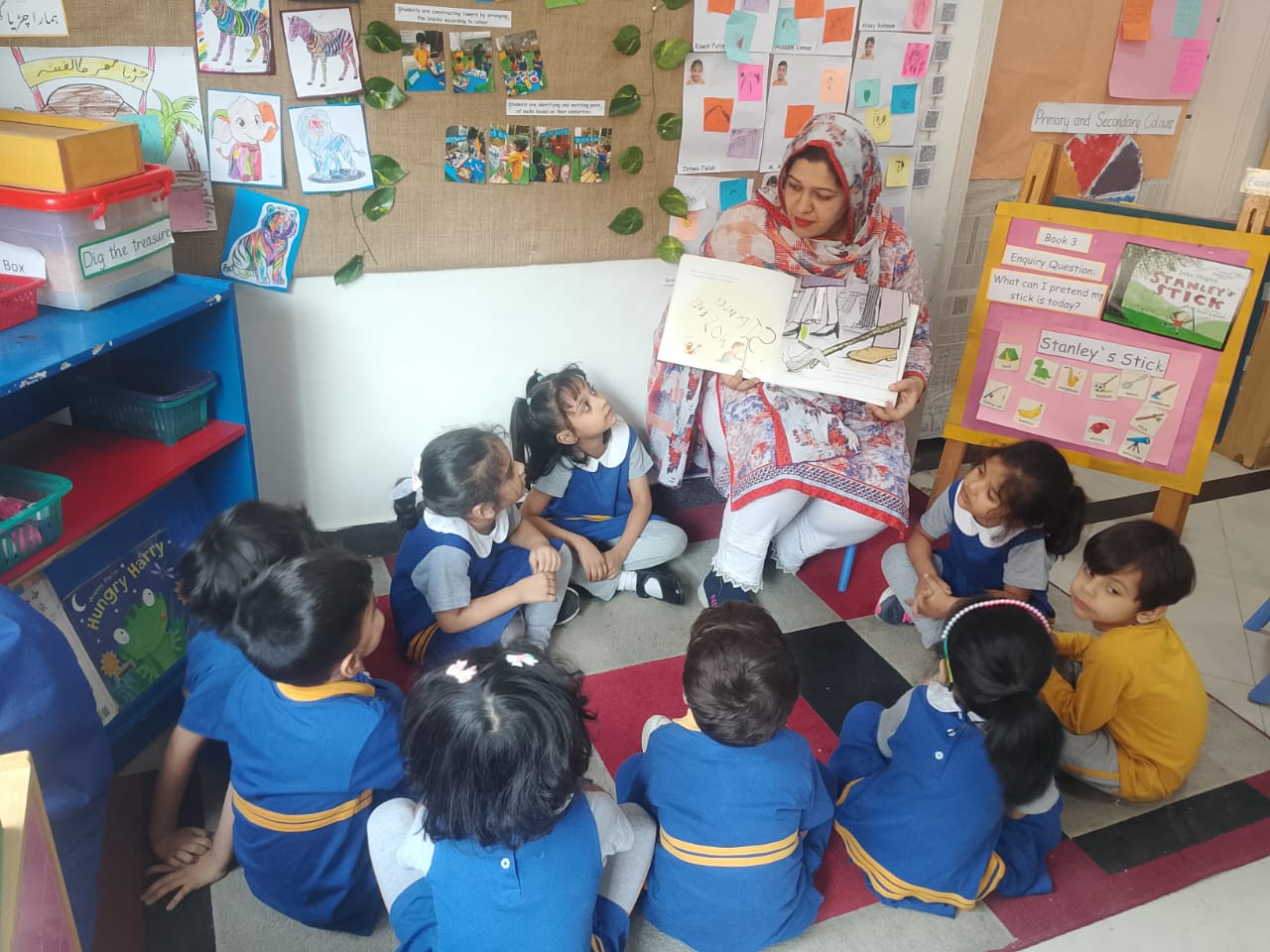
Right before home time wrap-up, as the day ends and our little ones prepare to head home, I pick up a colorful book or sit on our carpet mat. Little faces light up with curiosity, restless little bodies gently settle, and little minds get ready to jump into a brand-new world. As a nursery teacher, I observe every day that storytelling isn’t just a calm way to wind down the afternoon. It is the best tool we have to build language, help kids handle big feelings, and make sense of their world before saying goodbye for the day.
My own love for storytelling started when I was in school myself. I was always very fond of reading books. I would visit the school library regularly, picking out books in both Urdu and English. I especially loved exploring stories from different cultures, like Chinese tales, Olden-Day British stories, and rich Persian folklore. I vividly remember when my teacher used to ask each student about the particular storybook they had read. I would eagerly prepare for that activity, full of excitement to share my thoughts with my teacher and the whole class. My absolute favorite was Charlie and the Chocolate Factory, which was later made into a movie! That early joy of discovery is what inspired me to bring the magic of books into my own teaching.
There is real science happening behind those eager, focused faces during our end-of-day story time. When children listen to a story, their brains light up in many places at once. The brain of the storyteller and the brain of the listener actually sync up! Stories help release “happy hormones” that make children feel safe, as well as chemicals that help them care about others. Just last week, when we read The Ant and the Dove, I saw one of my children wrap their arms tightly around their knees in suspense when the hunter appeared. Their brain was practicing real empathy, understanding kindness, and learning how characters help each other.
In our early years classroom, storytelling comes in many fun shapes and sizes:
Oral Storytelling: Telling tales using just our voice and facial expressions, which helps children build strong listening skills without needing pictures.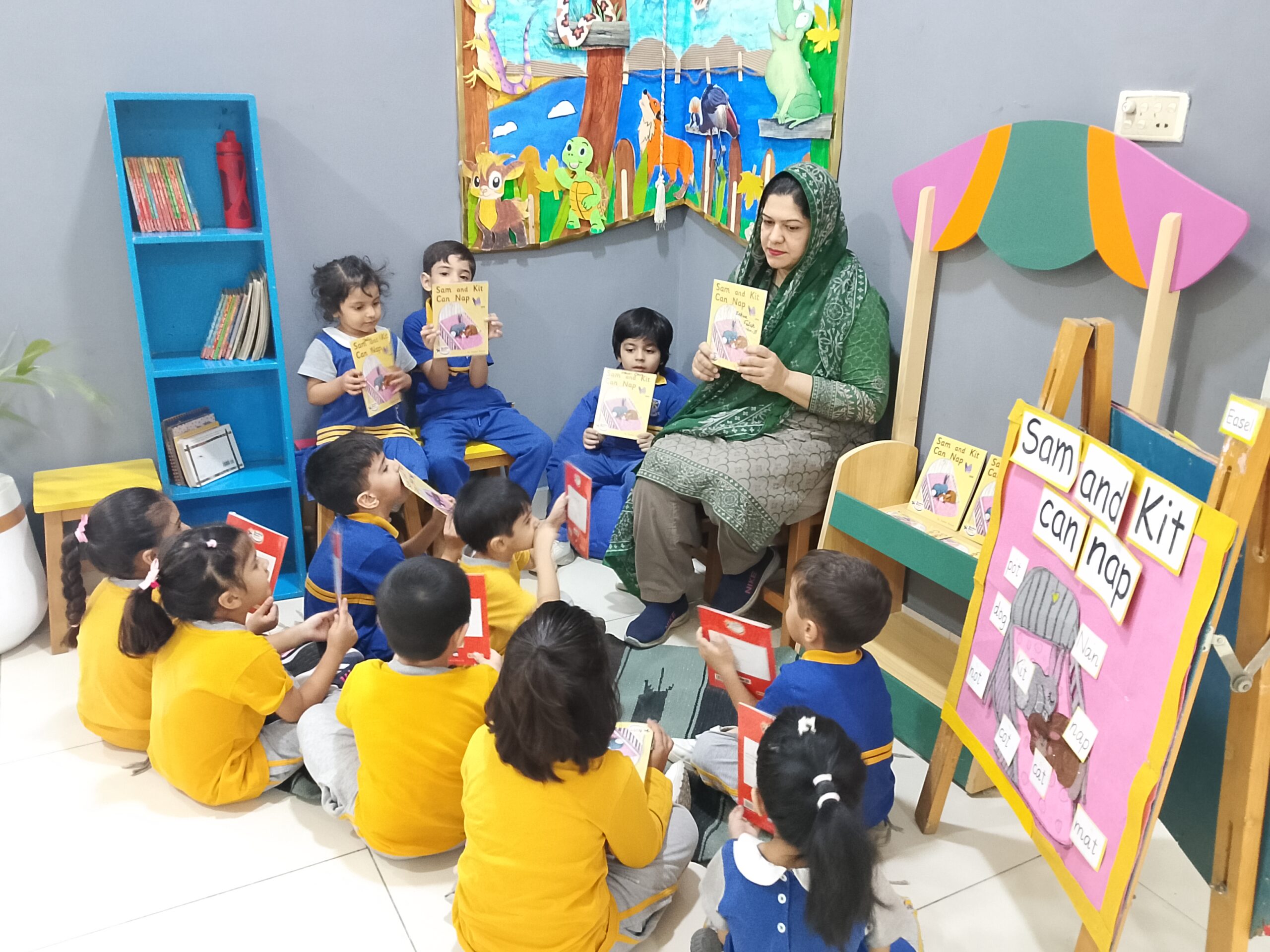
Interactive Book Reading: Looking at big, bright picture books together, which teaches new words and shows how reading works.
Sensory and Prop Storytelling: Using puppets, felt boards, or wooden toys to bring tales to life. For example, using a soft caterpillar toy that “eats” through felt leaves makes new words real and easy to touch.
I have also noticed that the children respond best when we share stories in Urdu! Hearing tales like The Ant and the Dove in Urdu, whether it is a classic fable, a fun animal story, or a simple everyday adventure, makes the children feel instantly connected and excited. The familiar words and rhythmic sounds make them laugh faster and join in more naturally, which builds a strong bridge between their home language and classroom learning.
To make story time truly responsive, we do not just read to the children, we talk with them. Responsive storytelling means watching their facial expressions, listening to their ideas, and letting them join in. If a child gets excited because an illustration of a bird looks like one in their garden, I pause so they can share in Urdu or English. We ask easy questions like, “Why do you think the dove helped the ant?” or “What would you do next?” Following their curiosity turns reading into a fun conversation.
Using storytelling right before home time gives our children so much more than basic reading skills. It sends them home with comfort, emotional strength, and a love for learning that stays with them. When you gather your little ones on the rug at the end of the day, remember that you are doing more than reading words, you are helping young brains grow, building kindness, and making sweet memories that last long after story time ends.
Prepared by Salima Sheraz
Nursery Teacher